
Books > Songs of Eminence
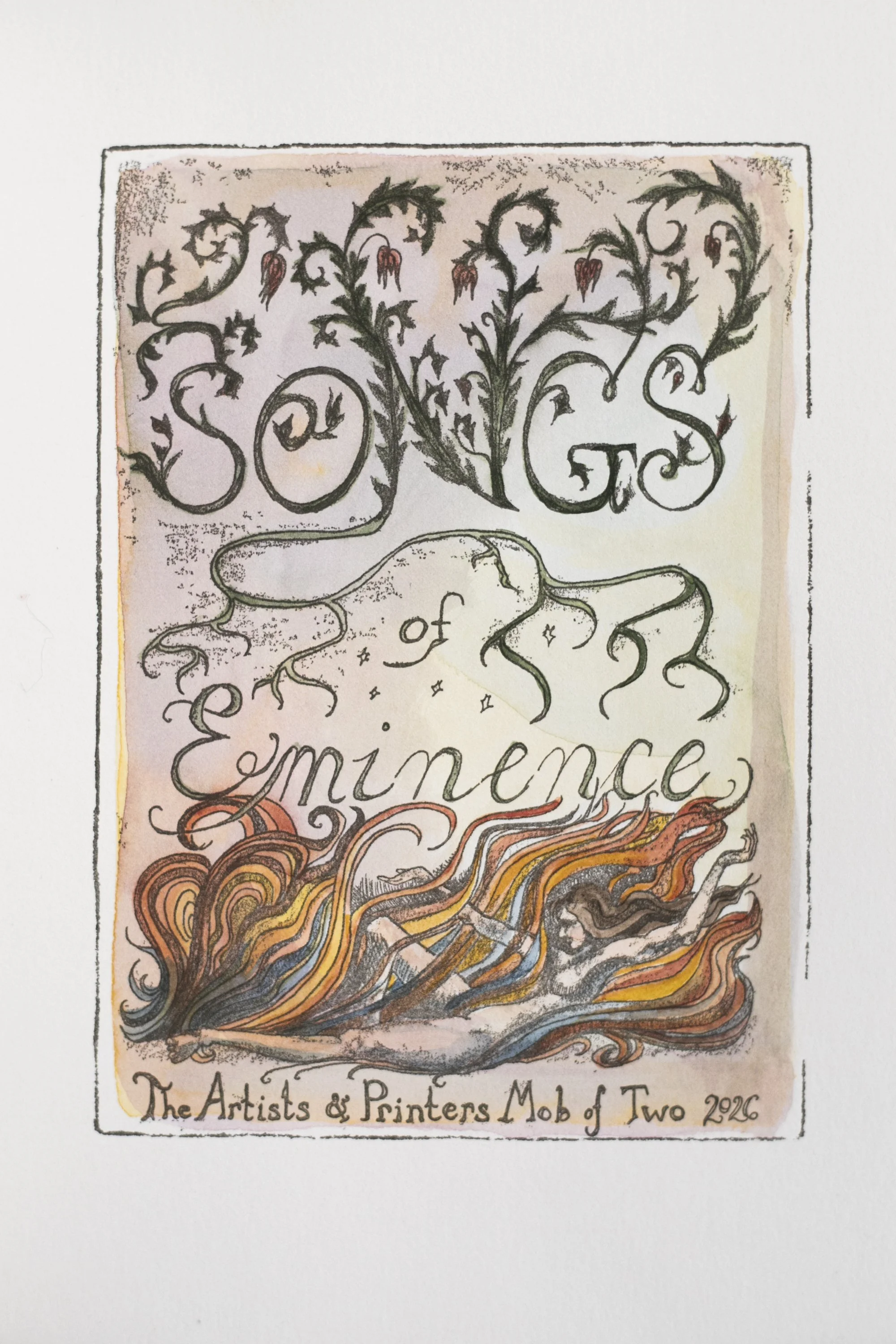
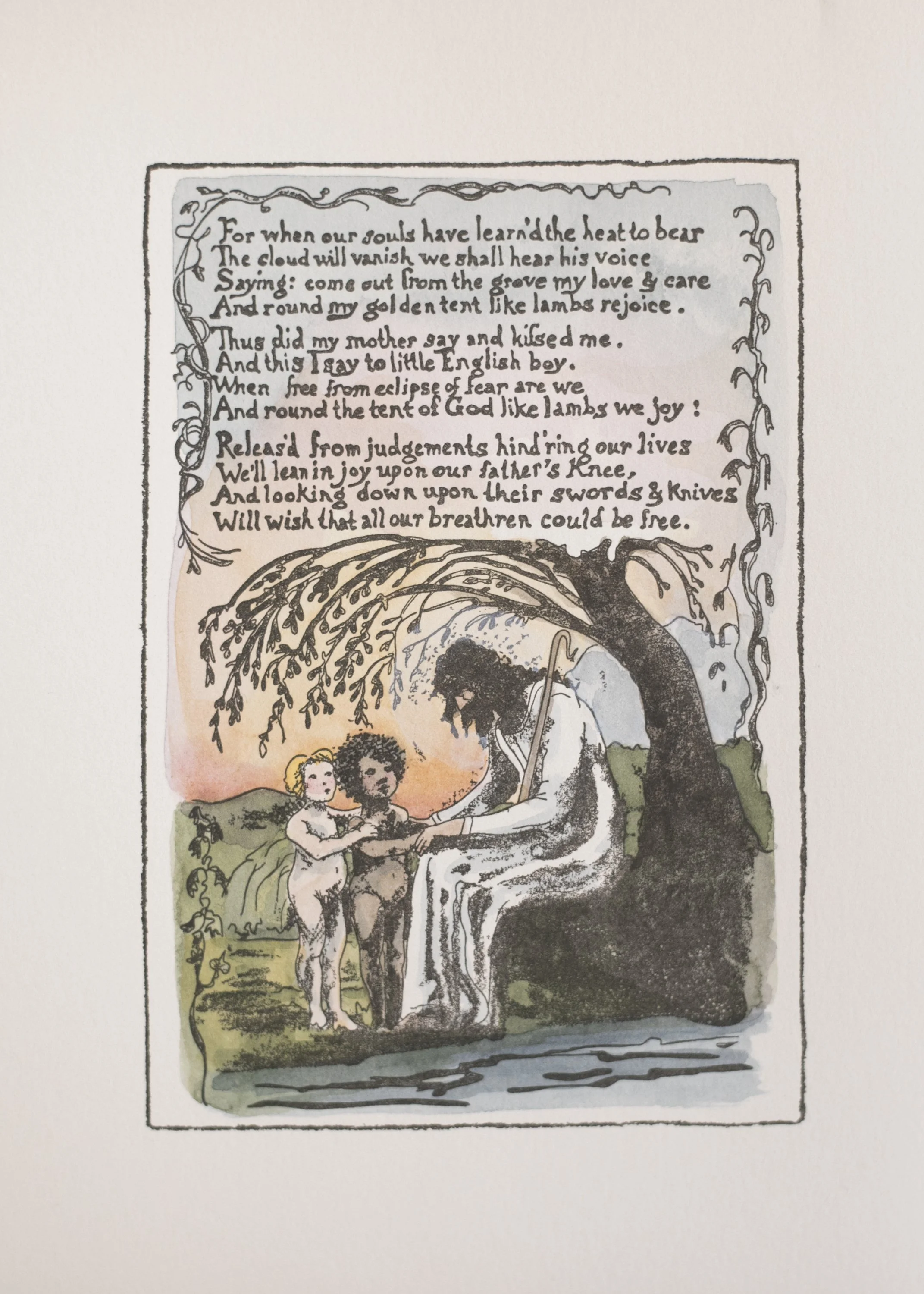
A collaboration with Tiana Krahn. In Songs of Eminence, we learn that cosmic truth, like artistic intent, is multifaceted. We use William Blake’s 4 levels of spiritual awareness as a catalyst to transmogrify some of the problematic elements in his work and in the world today.
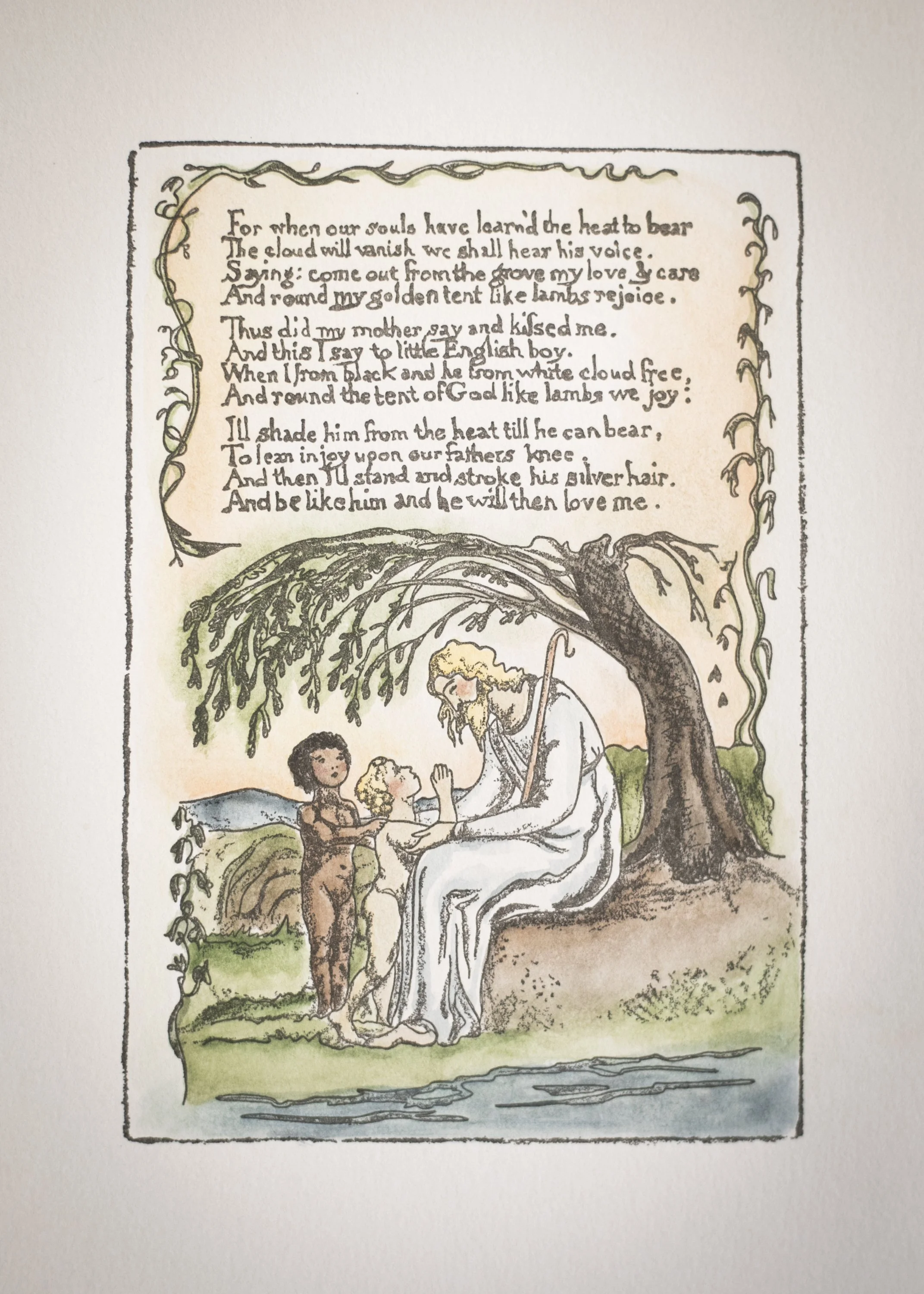
In this artist’s book, created in the 200th year after William Blake’s death, we have a conversation with him about his poem, “The Little Black Boy,” then learn a thing or two about certitude in a psychedelic encounter with his “friends from eternity.” We understand that reality is bigger than any one individual or culture can perceive or comprehend.
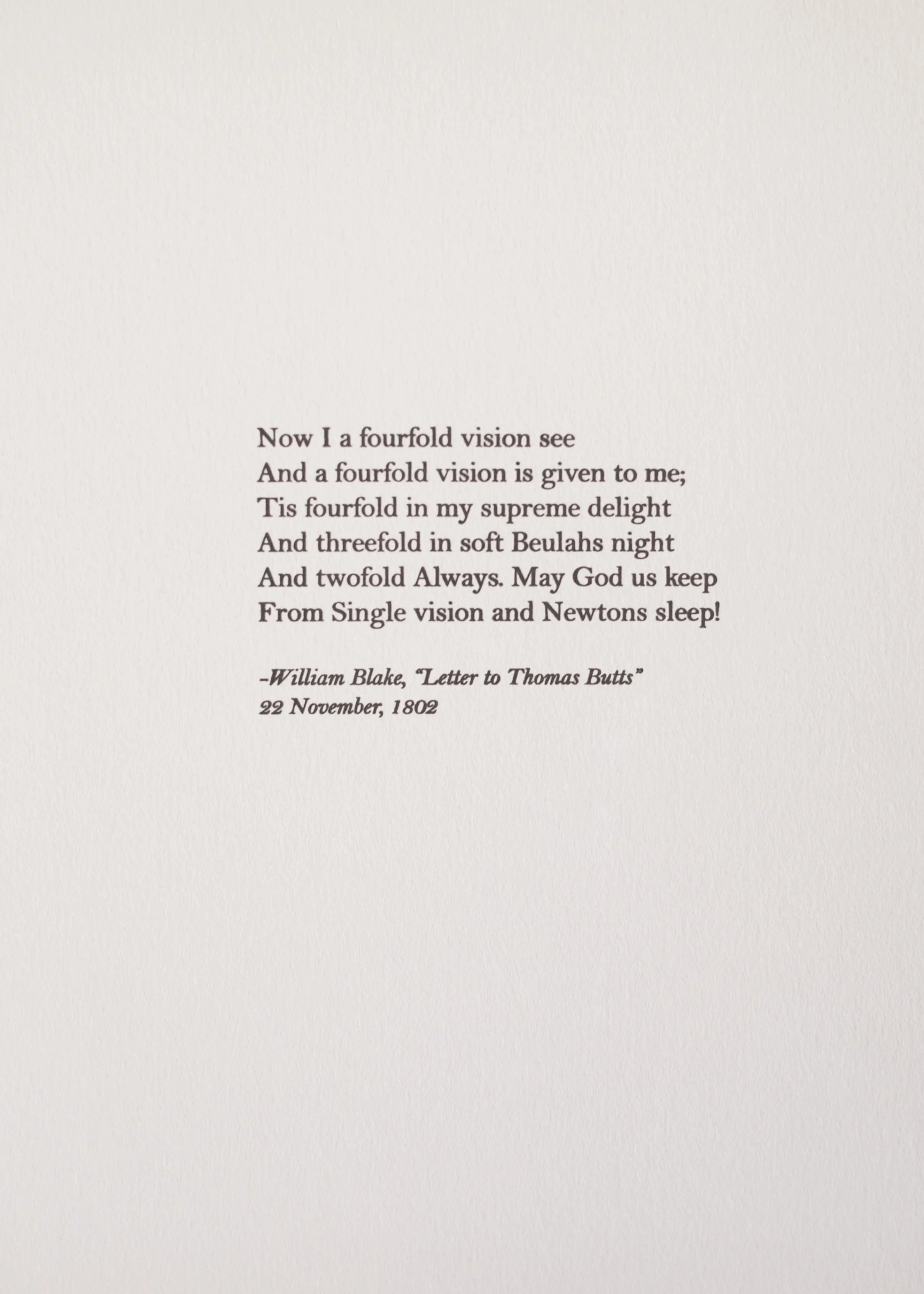
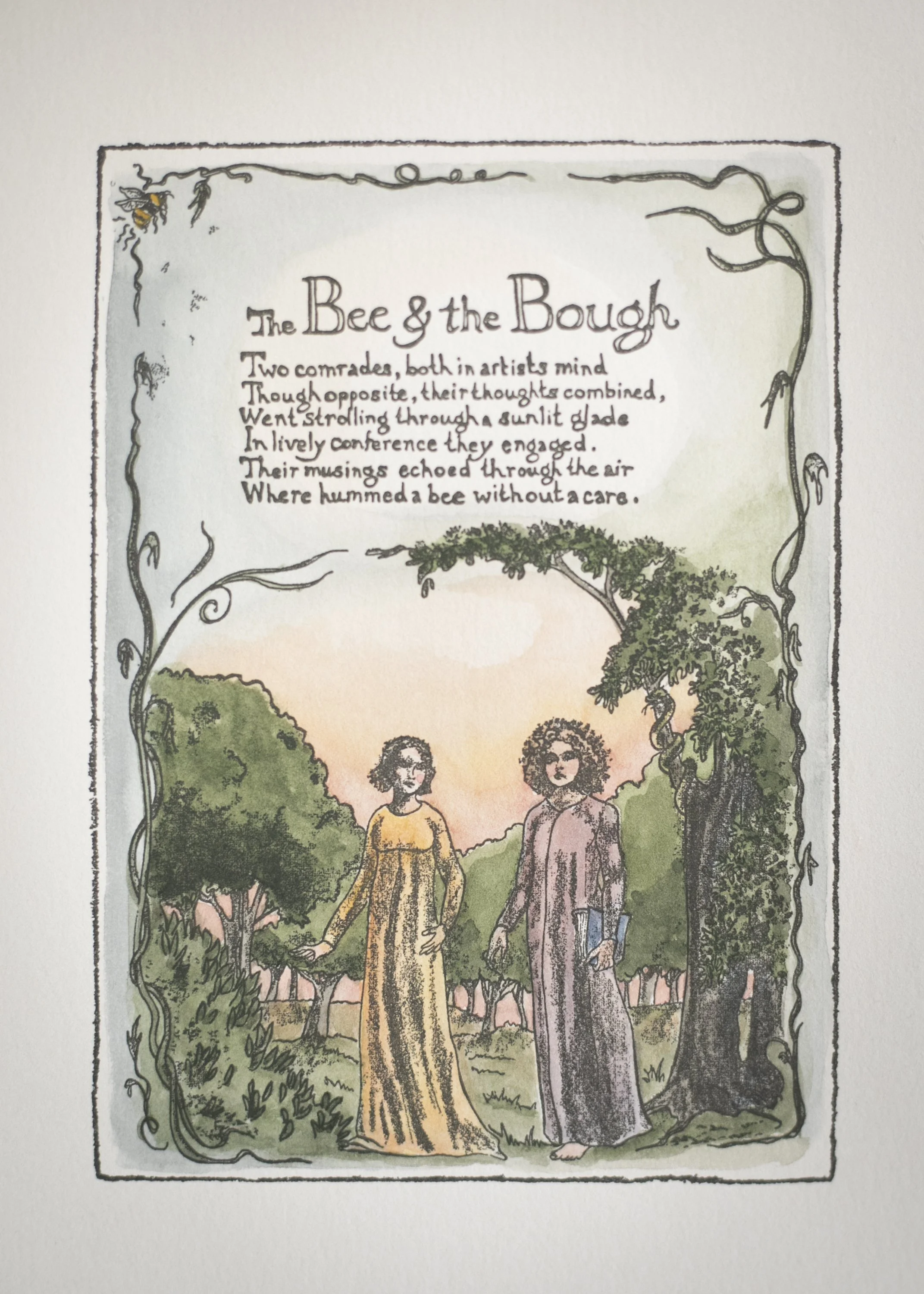
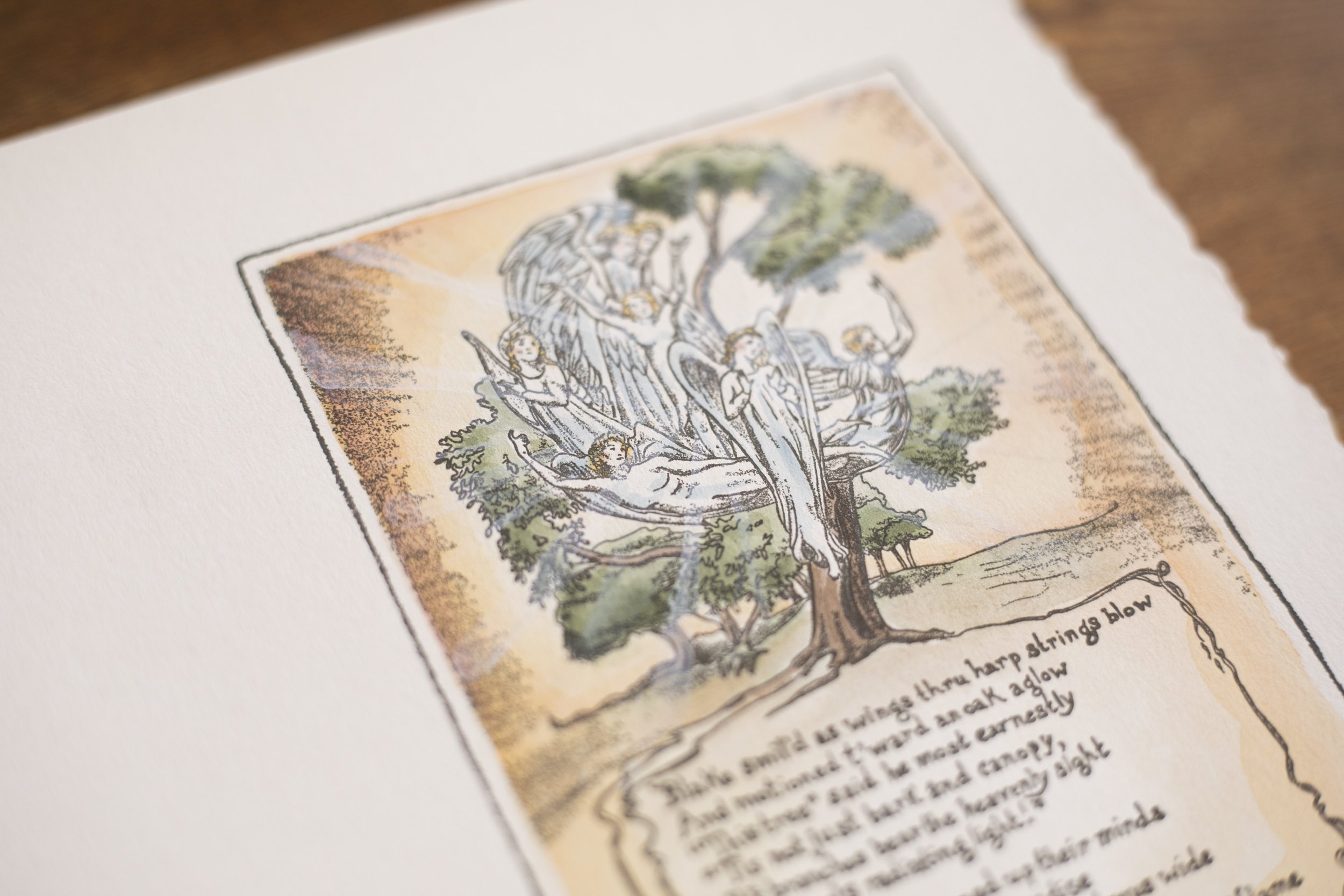
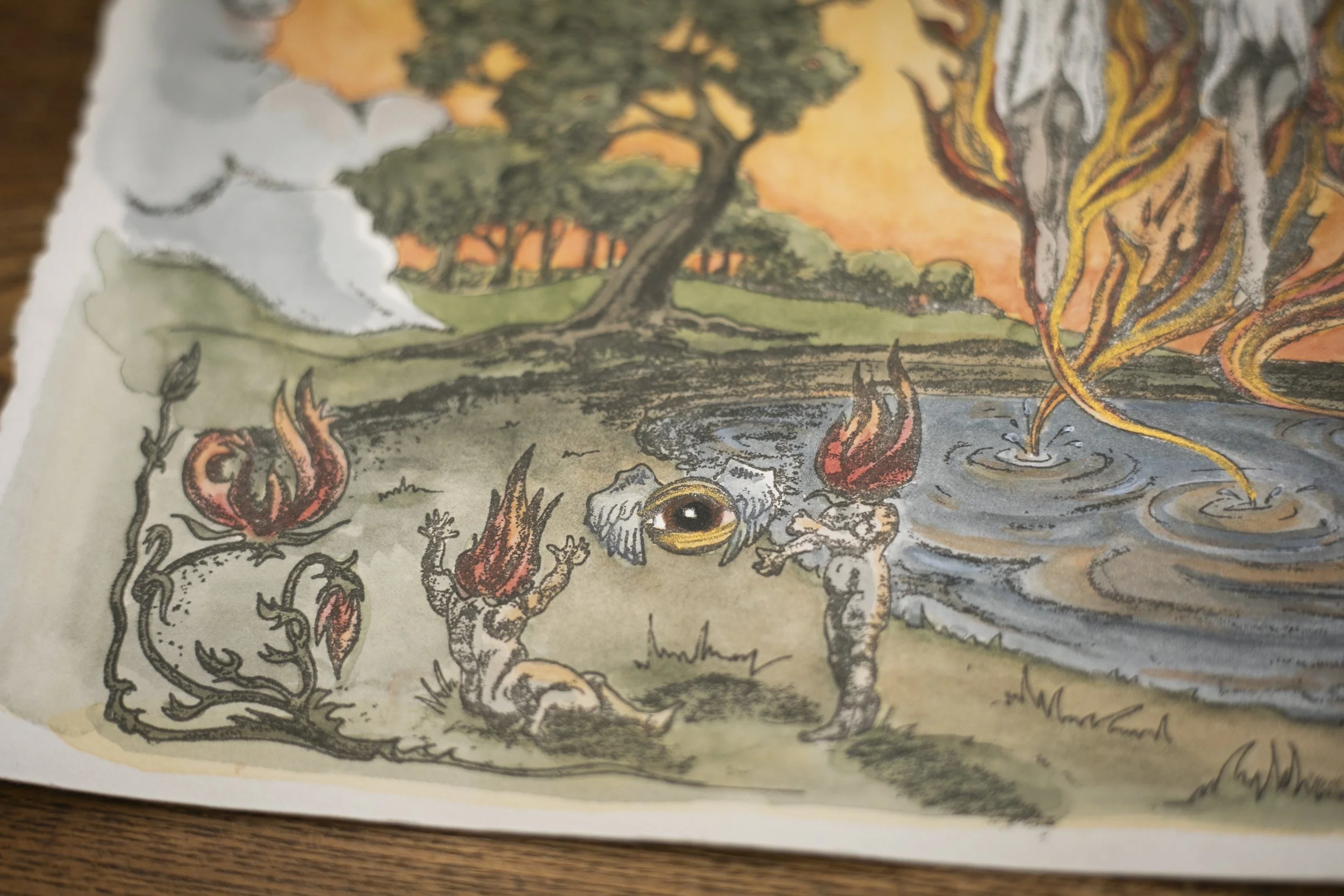
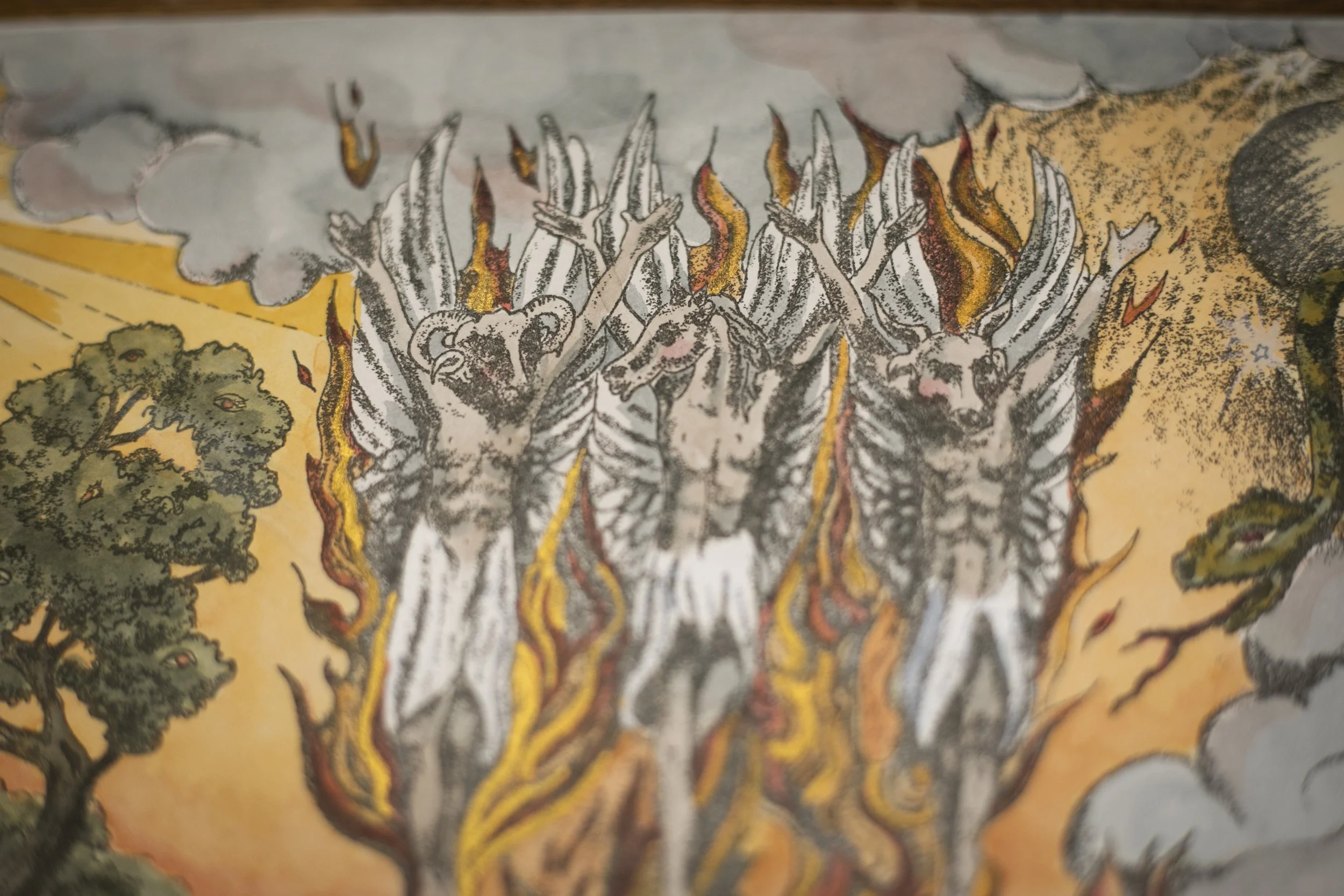
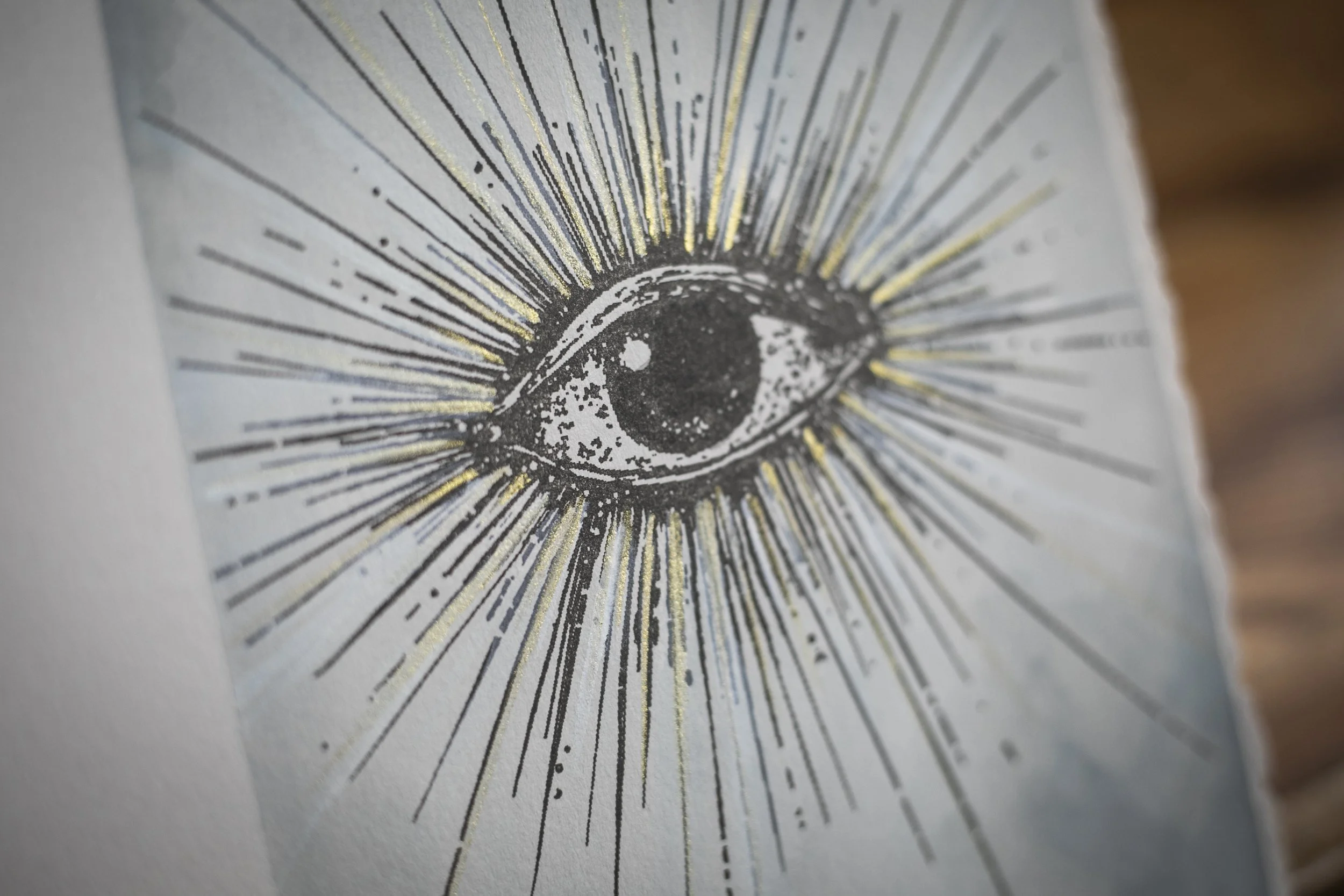
Using letterpress and watercolors in the style of Blake, we first recreate two of his plates, then present our own poems and illustrations, which incorporate imagery found in his works, to push our inquiry further.
Read more, below.
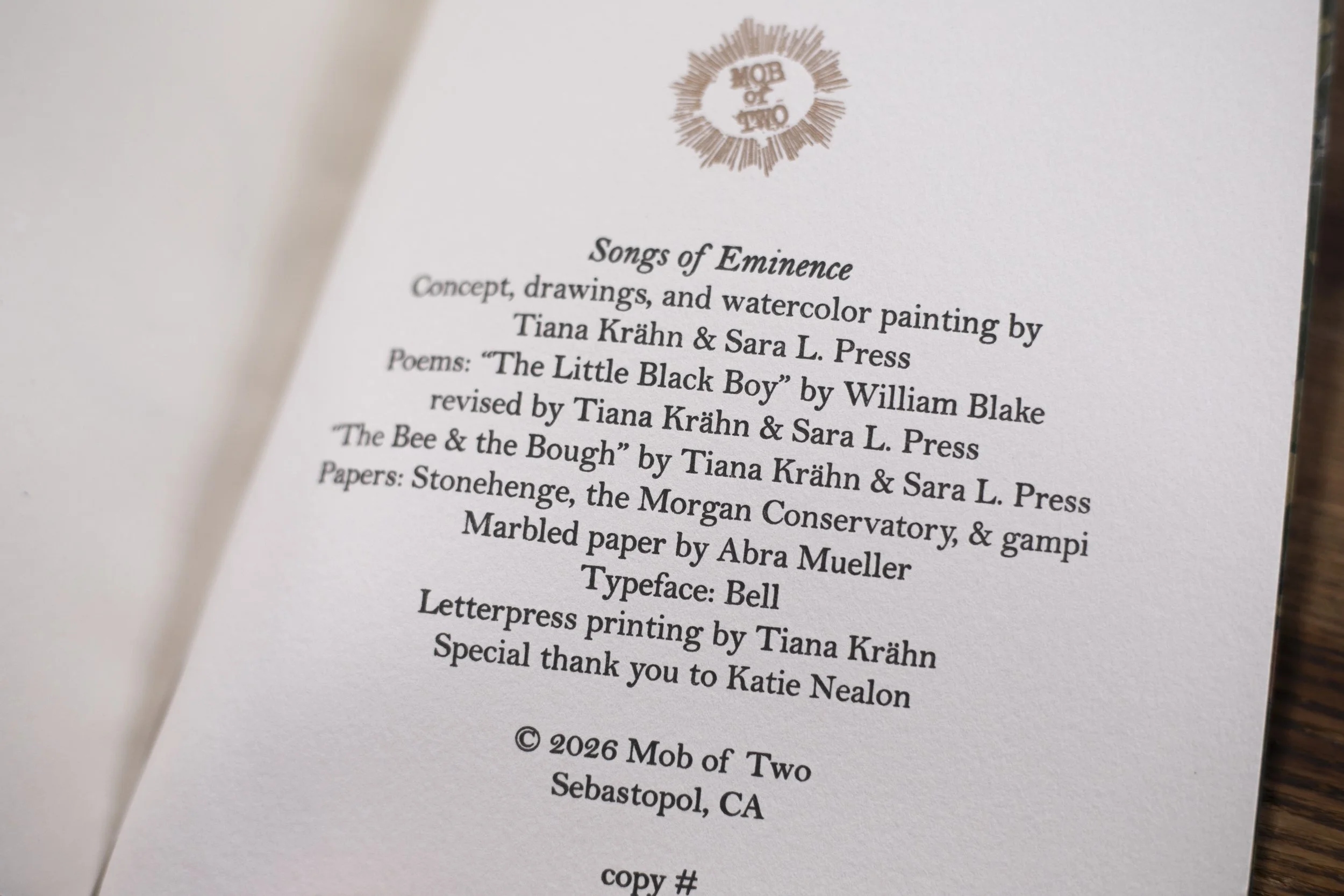
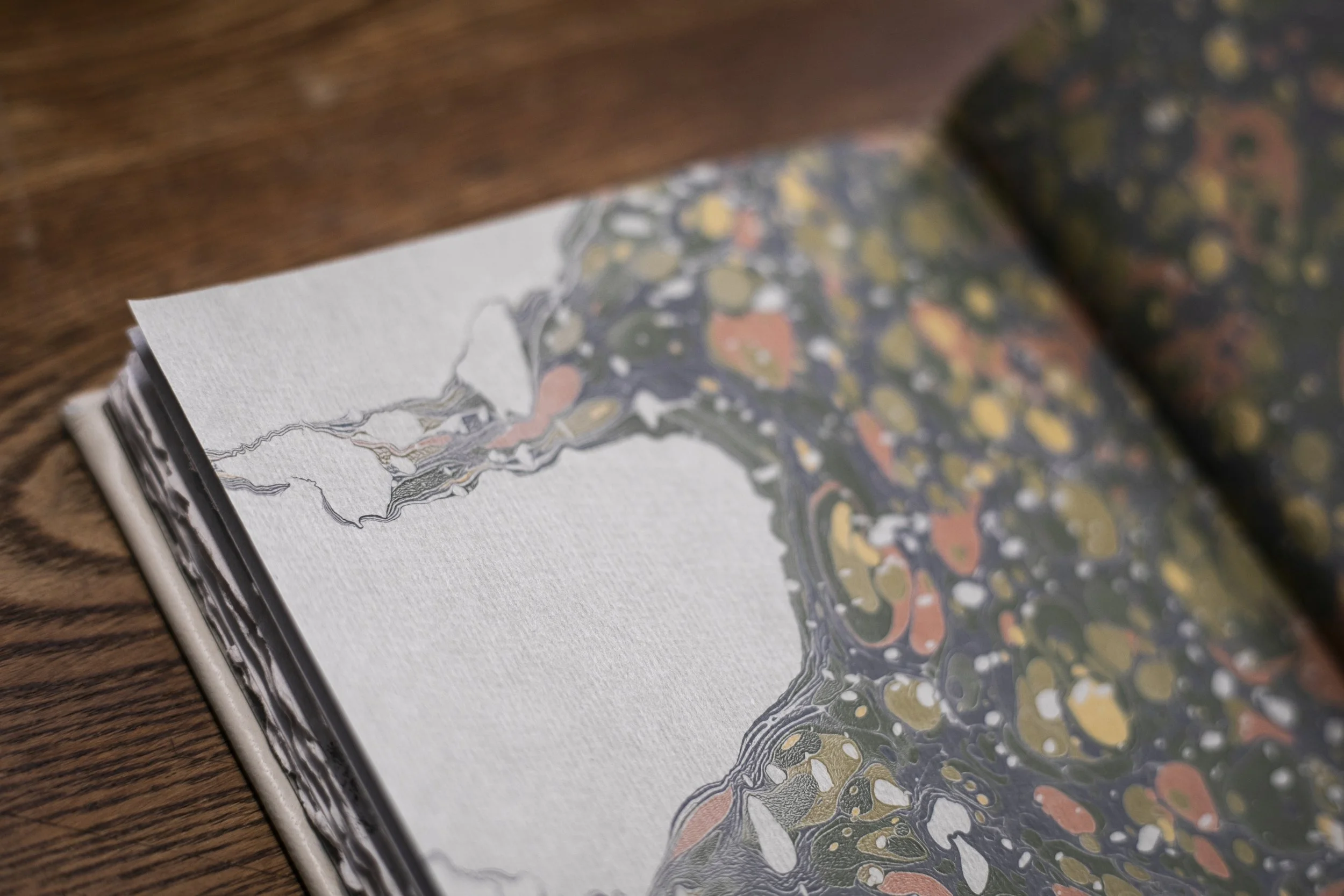
Edition of 28 copies bound in leather, with hand painted letterpress prints, custom marbled endpapers, & evolving poetry. 40 pages, 6”x 8”.
Eighteenth-century England was a very different world than ours, and the conversation around racial equality there was in its nascent stages, as evidenced by Blake’s hamfisted approach in “The Little Black Boy.” We began this book project by wondering what it would look like to lead Blake into the light around this issue (perhaps with the same patronizing tone he had used in his well-intended but offensive poem).
He was empathetic and radical and a product of his time. If he had known better, would he have done better?
It’s impossible to say. Aside from the cultural differences of his time and place, Blake was a hardheaded eccentric. And, superceding all other considerations, he had been seeing full-blown visions of angels and other supernatural beings since early childhood. He had little interest in debating politics or ethics with his contemporaries, because the Truth as he saw it was immutable and had been divinely communicated to him. The purpose of his oeuvre was, presumably, to help the rest of us see it.
Blake described multiple levels of perceiving the world. From what we understand, Newton’s Sleep and Single Vision are the limited state of believing only in what our own senses can perceive and measure.
Twofold, the state Blake described as his default, means that he saw both what his senses perceived as well as other layers of meaning. This means he experienced images and symbols throughout his everyday life.
In Threefold vision the images and symbols take on a life of their own. Also called Beulah, it might be a dream state, or the act of creating art. In Beulah, opposites exist simultaneously, balancing or upsetting each other and propelling growth and change.
Fourfold vision is the all knowing soul of mankind and the divine, the unification of all states of being. It is Blake's ”supreme delight”.
Our book, Songs of Eminence, contemplates Blake’s levels of spiritual awareness and applies them to our own quest: to understand how a beloved literary figure, a revolutionary and abolitionist who sought social justice for child laborers, and a spiritual visionary who spoke with angels daily, could have had such limited vision in certain respects.